
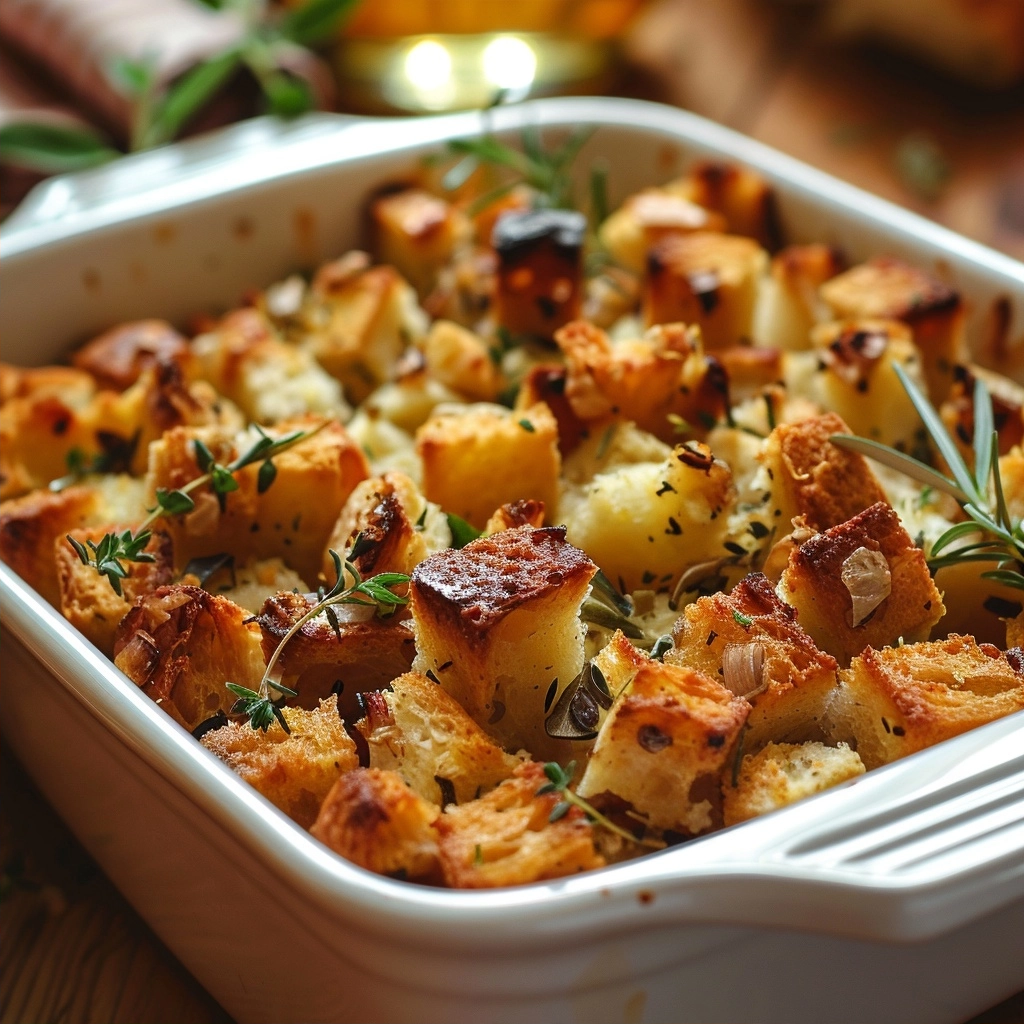
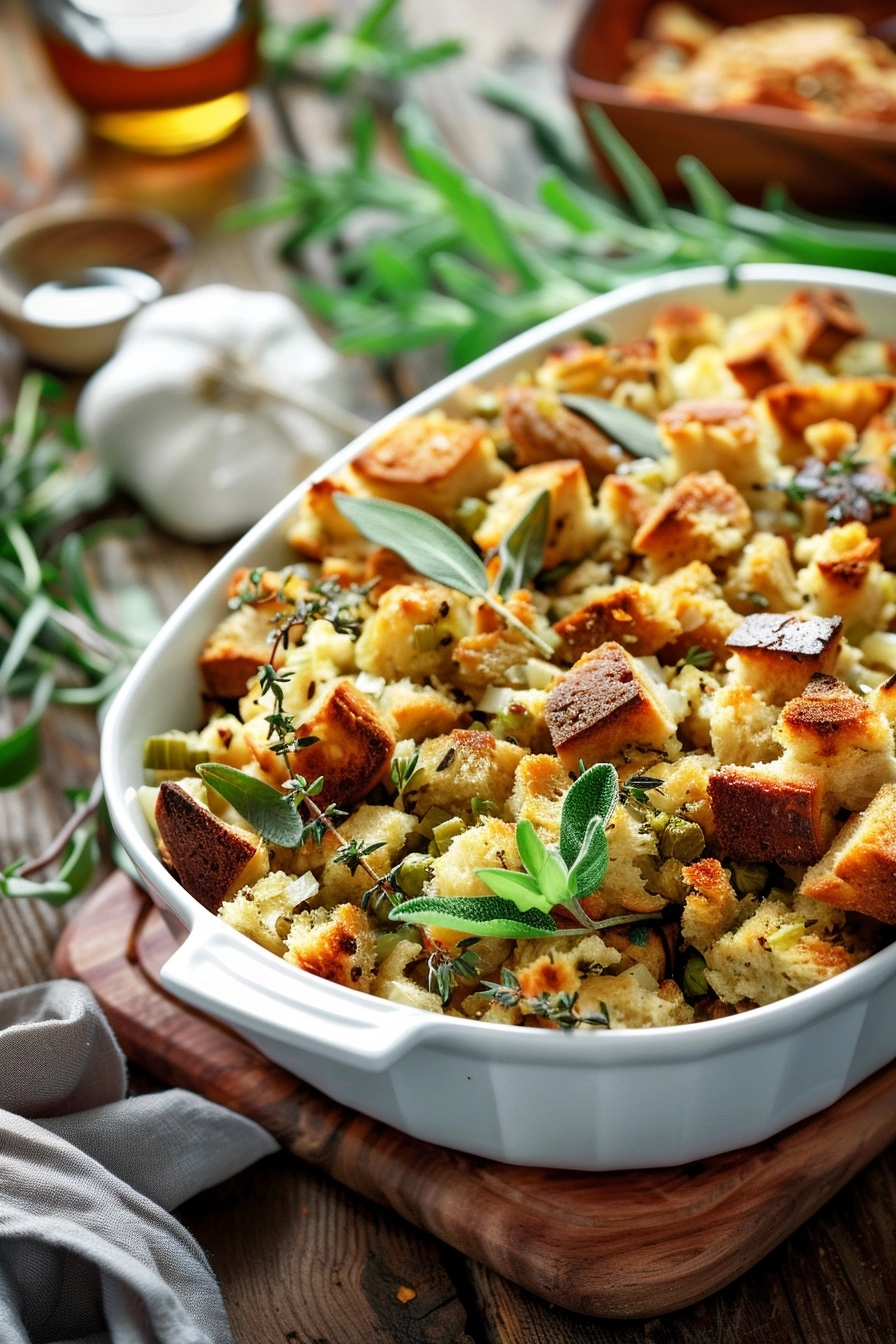
Homemade stuffing with sage and thyme creates a savory, aromatic centerpiece for your holiday table. This traditional side dish relies on crusty bread cubes, fresh garden herbs, and rich vegetable broth to achieve the perfect texture. By roasting these ingredients together, you develop a golden-brown crust and a moist interior that pairs beautifully with roasted vegetables or main courses. Following this method guarantees consistent, high-quality results every single time you cook.
Recipe Overview
| Attribute | Details |
|---|---|
| Prep Time | 20 minutes |
| Cook Time | 45 minutes |
| Total Time | 65 minutes |
| Servings | 8 servings |
| Difficulty | Easy |
| Cuisine | American Traditional |
Why This Recipe Works
This recipe works because it balances the earthy intensity of fresh sage and thyme with the subtle sweetness of aromatics like celery and onion. I developed this process to avoid the common pitfall of soggy stuffing by utilizing slightly stale bread, which acts as a sponge for the flavorful broth. The natural fats in the butter ensure that every cube of bread toasts perfectly, creating an irresistible contrast between crunchy edges and soft, savory centers.
You will appreciate the simplicity of this approach, as it relies on pantry staples rather than complex techniques or obscure ingredients. The combination of fresh herbs provides a depth of flavor that dried alternatives often lack, making your kitchen smell like a professional bakery. This dish consistently receives praise because it respects the traditional roots of Thanksgiving sides while ensuring a modern, foolproof preparation style.
Ingredients
| Ingredient | Quantity | Notes |
|---|---|---|
| Stale Sourdough Bread | 12 cups | Cube into one-inch pieces |
| Unsalted Butter | 1 cup | Melted or softened |
| Yellow Onion | 1 large | Finely diced |
| Celery Stalks | 3 stalks | Sliced thinly |
| Fresh Sage | 1/4 cup | Finely chopped |
| Fresh Thyme | 2 tablespoons | Leaves removed from stems |
| Vegetable Broth | 3 cups | Low sodium preferred |
| Kosher Salt | 1 teaspoon | Adjust to personal taste |
| Black Pepper | 1/2 teaspoon | Freshly ground |
Step-by-Step Instructions
Preparation Phase
- Preheat your oven to 375 degrees Fahrenheit to ensure even baking temperatures.
- Spread bread cubes onto two large baking sheets in a single layer.
- Toast bread in the oven for 15 minutes until light brown and dry to the touch.
- Transfer the toasted bread into a large mixing bowl for the base.
Sauté Phase
- Melt butter in a large skillet over medium heat until bubbling.
- Add the diced onion and celery to the skillet to sweat them properly.
- Cook vegetables for 8 minutes until they become translucent and soft.
- Stir in fresh sage and thyme to release their essential oils into the butter.
Mixing and Baking Phase
- Pour the herb-butter mixture over the bread cubes in the mixing bowl.
- Toss the bread gently with a large spoon to coat every cube evenly.
- Drizzle the vegetable broth over the mixture in small, steady increments.
- Season the mixture with salt and pepper while tossing continuously.
- Transfer the stuffing into a greased 9×13 inch baking dish for final assembly.
- Bake for 30 minutes until the top layer achieves a deep golden brown color.
Chef Tips for Perfect Results
- Use day-old bread or leave fresh cubes out on the counter overnight to achieve the ideal moisture-absorbing texture.
- Fresh herbs possess significantly more aromatic oils than dried varieties, so prioritize them for the best flavor profile.
- Adjust the amount of vegetable broth based on how crunchy you prefer your final dish to be.
- Cover the dish with foil for the first 20 minutes if you want a softer, more uniform texture throughout.
- Check the seasoning level after adding the broth to ensure it matches your preference before the final bake.
Common Mistakes to Avoid
- Using fresh, soft bread leads to mushy stuffing that fails to hold its structure during the baking process.
- Overcrowding the skillet prevents the onions and celery from browning, which removes essential depth from your base.
- Adding too much broth creates a soggy consistency that will not crisp up properly in the oven.
- Forgetting to season between layers results in a bland dish that relies too heavily on the herbs alone.
Variations and Substitutions
| Ingredient | Substitution | Impact on Flavor |
|---|---|---|
| Sourdough | Gluten-free bread | Adds a slightly nuttier, denser crumb texture |
| Butter | Olive oil | Creates a lighter, more Mediterranean flavor profile |
| Vegetable Broth | Mushroom stock | Deepens the savory umami notes significantly |
Serving Suggestions and Pairings
Serve this stuffing alongside roast turkey or a hearty vegetable roast. It pairs perfectly with cranberry sauce and roasted root vegetables for a complete holiday meal. For an elegant touch, garnish the top with fresh, fried sage leaves right before serving to guests.
Storage and Reheating
| Method | Duration | Instructions |
|---|---|---|
| Refrigerator | 3-4 days | Store in an airtight container |
| Oven Reheat | 15 minutes | Cover and heat at 350 degrees |
| Microwave | 2 minutes | Use a microwave-safe cover to trap steam |
Nutritional Information
Approximate values per serving:
| Nutrient | Amount per Serving |
|---|---|
| Calories | 280 kcal |
| Protein | 6g |
| Fat | 12g |
| Carbohydrates | 38g |
| Fiber | 3g |
Frequently Asked Questions
Can I prepare this stuffing ahead of time?
You can assemble the unbaked stuffing in your dish and store it covered in the refrigerator for up to 24 hours. Remove it from the fridge 30 minutes before baking to allow it to reach room temperature for even cooking. This method actually allows the flavors to meld further, often resulting in a more cohesive dish.
What is the best bread for stuffing?
Sourdough or a crusty French baguette provides the sturdiest structure for the best homemade stuffing. These varieties hold their shape well when combined with liquid, preventing the dish from turning into bread pudding. Ensure your bread cubes are sufficiently toasted to maximize this texture contrast.
How do I fix dry stuffing?
Add an extra half-cup of warm vegetable broth to the mixture and gently fold it in before returning the dish to the oven. You should then cover the container with foil to trap the steam and rehydrate the bread cubes effectively. This simple step saves your dish without compromising the flavor profile of your sage and thyme.
Can I use dried herbs instead?
You can substitute dried herbs, but you must reduce the quantity to one-third of the fresh measurement since dried herbs are more potent. Crush the dried herbs between your fingers to release their oils before adding them to the butter and vegetable mixture. While acceptable, fresh herbs will always provide a superior, brighter finish to this traditional recipe.
How can I tell when stuffing is done?
The stuffing is done when the internal temperature reaches 165 degrees Fahrenheit and the top appears golden brown. You can also press the center lightly to ensure it feels firm rather than spongy. A properly baked stuffing should pull away slightly from the edges of the baking dish.
Mastering this homemade stuffing with sage and thyme elevates any meal into a memorable occasion. By following these precise steps and focusing on quality bread and fresh herbs, you ensure a savory success that your family will request annually. Embrace the rustic charm of this classic side and enjoy the aromatic warmth it brings to your table. There is nothing quite like the combination of fresh, garden-picked herbs to define the essence of a perfect holiday feast.
PrintHomemade Stuffing with Sage and Thyme
Create a savory and aromatic centerpiece for your holiday table with this traditional herb-infused stuffing. By utilizing crusty sourdough bread and a blend of fresh sage and thyme, this side dish offers a perfect contrast between golden-brown crunchy edges and a moist, flavorful interior. Relying on pantry staples like aromatic celery and onion, this foolproof method ensures a consistent and high-quality result that pairs beautifully with roasted vegetables or your favorite holiday main course.
- Prep Time: 20
- Cook Time: 45
- Total Time: 65
- Yield: 8 servings 1x
- Category: dinner
- Method: Baking
- Cuisine: American Traditional
- Diet: Vegetarian
Ingredients
12 cups stale sourdough bread, cubed into one-inch pieces
1 cup unsalted butter, melted
1 large yellow onion, finely diced
3 stalks celery, thinly sliced
1/4 cup fresh sage, finely chopped
2 tablespoons fresh thyme, leaves removed
3 cups vegetable broth, low sodium
1 teaspoon kosher salt
1/2 teaspoon freshly ground black pepper
Instructions
Preheat your oven to 375 degrees Fahrenheit.
Spread bread cubes onto two large baking sheets in a single layer.
Toast bread in the oven for 15 minutes until light brown and dry to the touch.
In a large skillet, melt the butter over medium heat.
Add the onion and celery to the skillet and sauté until softened, about 5 to 7 minutes.
Stir in the fresh sage and thyme, cooking for another minute until fragrant.
Place the toasted bread cubes in a large mixing bowl.
Pour the vegetable mixture over the bread and add the vegetable broth.
Season with salt and pepper, tossing gently to combine until the bread is evenly moistened.
Transfer the mixture to a buttered baking dish.
Bake for 30 to 45 minutes until the top is golden brown and crispy.
Notes
Ensure the bread is slightly stale to prevent the stuffing from becoming soggy. You can cube the bread the night before and leave it out to dry, or toast it in the oven as directed. Store leftovers in an airtight container in the refrigerator for up to 3 days.
Nutrition
- Serving Size: 1 cup
- Calories: 285
- Sugar: 4g
- Sodium: 450mg
- Fat: 14g
- Saturated Fat: 8g
- Carbohydrates: 34g
- Fiber: 2g
- Protein: 6g
- Cholesterol: 30mg