
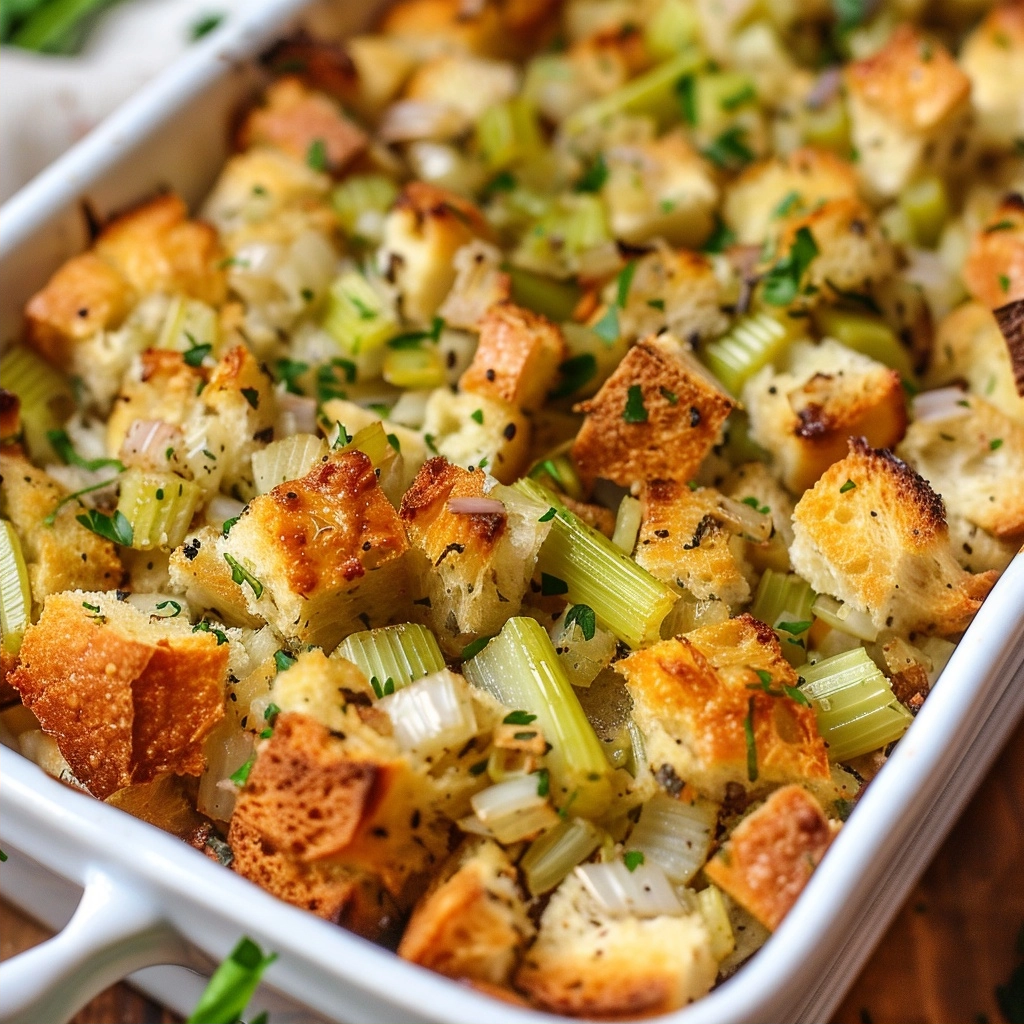
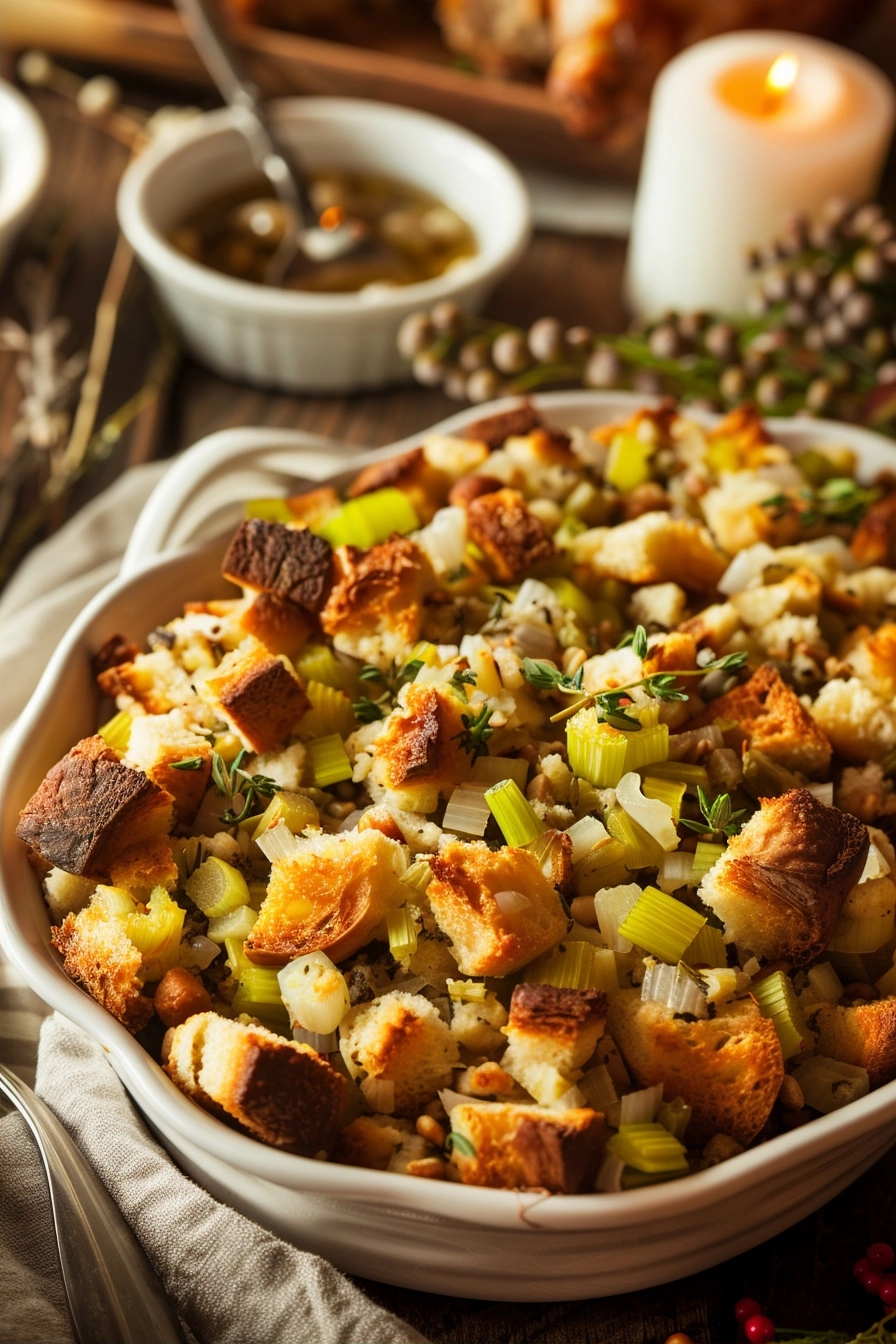
Easy traditional bread stuffing with celery and onions serves as the perfect savory accompaniment to any holiday poultry or roast dinner. This classic recipe relies on simple, fresh ingredients to create a rich, moist texture and deep herbal flavor profile. Home cooks appreciate this reliable method for achieving consistent results during busy festive gatherings without complex techniques or obscure ingredients.
| Prep Time | Cook Time | Total Time | Servings | Difficulty | Cuisine |
|---|---|---|---|---|---|
| 20 minutes | 45 minutes | 65 minutes | 8 | Easy | American Traditional |
Why This Recipe Works
This recipe works because it focuses on the balance between crusty bread, aromatic vegetables, and flavorful stock. By sautéing the celery and onions in butter first, you extract the maximum amount of sweetness and depth from these humble staples. The bread absorbs the savory broth, ensuring a moist interior while the top remains golden and slightly crisp.
I developed this version based on years of experimenting with various holiday side dishes. It avoids the heaviness of overly dense stuffings by calling for high-quality crusty white bread that holds its shape. You get a reliable, crowd-pleasing result that complements roasted chicken or turkey without stealing the spotlight from the main protein source.
Ingredients
| Ingredient | Quantity | Notes |
|---|---|---|
| White Bread | 12 cups | Cubed and dried overnight |
| Unsalted Butter | 1 cup | Melted or softened |
| Yellow Onion | 2 cups | Finely diced |
| Celery | 2 cups | Finely chopped |
| Vegetable Stock | 3 cups | Low sodium preferred |
| Fresh Sage | 2 tbsp | Finely minced |
| Fresh Parsley | 1/4 cup | Finely chopped |
| Dried Thyme | 1 tsp | Adds earthy depth |
| Kosher Salt | 1 tsp | Adjust to taste |
| Black Pepper | 1/2 tsp | Freshly cracked |
Step-by-Step Instructions
Preparing the Bread
- Cube the white bread into one-inch pieces.
- Spread the bread cubes onto a large rimmed baking sheet.
- Leave the cubes out at room temperature for at least twelve hours to dry.
Sautéing Aromatics
- Melt the butter in a large skillet over medium heat.
- Add the diced onions and chopped celery to the skillet.
- Cook the vegetables until they reach a soft, translucent state.
Combining and Baking
- Preheat your oven to 350 degrees Fahrenheit.
- Transfer the dried bread cubes into a large mixing bowl.
- Pour the cooked vegetable mixture over the bread cubes.
- Add the fresh herbs, salt, pepper, and stock gradually while tossing.
- Transfer the mixture to a buttered casserole dish.
- Bake for forty-five minutes until the top turns golden brown.
Chef Tips for Perfect Results
- Use stale bread that is at least one day old to prevent the stuffing from becoming mushy during the baking process.
- Toast your bread cubes in the oven at a low temperature for twenty minutes if you lack time to air-dry them overnight.
- Pour the vegetable stock slowly to maintain control over the moisture level of your bread mixture.
- Incorporate fresh herbs whenever possible, as they provide significantly more aromatic impact than dried alternatives.
- Grease your casserole dish thoroughly with butter to prevent the edges from sticking during the long bake time.
Common Mistakes to Avoid
- Using fresh, soft bread results in a dense, pudding-like consistency rather than individual bread cubes.
- Over-saturating the bread with too much liquid turns the dish into mush, so add stock gradually.
- Crowding the skillet while sautéing vegetables prevents even cooking and caramelization of the onions.
- Baking at a temperature that is too high will burn the surface before the interior has a chance to heat through.
Variations and Substitutions
| Ingredient | Substitution | Impact on Flavor |
|---|---|---|
| Vegetable Stock | Mushroom Broth | Adds intense umami notes |
| White Bread | Sourdough Bread | Provides a tangy, rustic bite |
| Fresh Sage | Dried Rosemary | Adds a stronger pine-like essence |
| Unsalted Butter | Olive Oil | Creates a lighter, Mediterranean finish |
Serving Suggestions and Pairings
Serve this stuffing alongside a traditional roasted chicken or a crown roast of lamb for an elegant holiday display. It pairs exceptionally well with creamy mashed potatoes and roasted root vegetables. For a complete feast, offer a side of cranberry sauce to provide a tart contrast to the savory herbal notes of the stuffing. This dish also works as a standalone vegetarian entree when paired with a fresh green salad tossed in a sharp vinaigrette.
Storage and Reheating
| Method | Duration | Instructions |
|---|---|---|
| Refrigerator | 3-4 days | Store in airtight container |
| Freezer | 2 months | Wrap tightly in plastic and foil |
| Oven Reheat | 20 minutes | Bake at 350F with extra broth |
Nutritional Information
Approximate values per serving.
| Nutrient | Amount per Serving |
|---|---|
| Calories | 240 kcal |
| Fat | 9g |
| Carbohydrates | 35g |
| Protein | 6g |
| Sodium | 450mg |
Frequently Asked Questions
Can I prepare this stuffing a day ahead?
You can prepare the entire mixture a day in advance and store it in the refrigerator before baking. Cover the dish tightly with foil to ensure the moisture stays within the bread until you are ready to cook. Allow the dish to sit at room temperature for thirty minutes before placing it in a preheated oven.
What is the best bread for stuffing?
The best bread for this recipe is a sturdy white loaf or sourdough that has been dried out significantly. Soft sandwich bread tends to dissolve into a paste during the cooking process and lacks the necessary structural integrity. Always prioritize a crusty loaf to ensure a better final texture for your stuffing.
How do I fix dry stuffing?
You can easily fix dry stuffing by drizzling additional warm vegetable stock over the top of the dish during the final stages of cooking. Ensure you distribute the liquid evenly across the surface to reach the center of the baking dish. Cover the dish with foil for the last ten minutes to allow the moisture to penetrate the bread cubes effectively.
Is this recipe suitable for vegetarians?
This recipe is entirely vegetarian as it uses vegetable stock instead of animal-based fats or broths. Ensure the butter used is dairy-based and verify that the bread ingredients do not contain hidden lard or animal fats. This dish serves as an excellent centerpiece for guests with meat-free dietary requirements.
How do I tell when stuffing is done?
The stuffing is done when the internal temperature reaches 165 degrees Fahrenheit and the top appears crisp and golden. You can also press the center of the dish gently to ensure it feels firm rather than soft or watery. A successful batch will have distinct, tender bread cubes held together by the savory moisture from the stock and butter.
Mastering this easy traditional bread stuffing with celery and onions guarantees a successful and stress-free holiday meal. By utilizing simple, high-quality ingredients and following these precise steps, you create a side dish that anchors any festive table. Enjoy the comforting, rustic appeal of this classic recipe, which highlights the aromatic beauty of fresh herbs and perfectly browned onions. Serve it warm to guests for a truly memorable dining experience that celebrates time-honored flavors in every single bite.
Easy Traditional Bread Stuffing
Prep: 20m | Cook: 45m | Yield: 8 servings
Easy Traditional Bread Stuffing with Celery and Onions
This classic, reliable bread stuffing is the ultimate savory accompaniment to any holiday poultry or roast dinner. By sautéing aromatic onions and celery in butter, you unlock a depth of flavor that perfectly complements the golden, crusty texture of the bread. This recipe focuses on fresh herbs and simple, high-quality ingredients to create a moist, herbaceous side dish that brings warmth and comfort to your table without any complicated techniques.
- Prep Time: 20
- Cook Time: 45
- Total Time: 65
- Yield: 8 servings 1x
- Category: dinner
- Method: Baking
- Cuisine: American Traditional
- Diet: Vegetarian
Ingredients
12 cups white bread, cubed and dried overnight
1 cup unsalted butter
2 cups yellow onion, finely diced
2 cups celery, finely chopped
3 cups vegetable stock, low sodium
2 tbsp fresh sage, finely minced
1/4 cup fresh parsley, finely chopped
1 tsp dried thyme
1 tsp kosher salt
1/2 tsp black pepper
Instructions
Cube the white bread into one-inch pieces and spread on a baking sheet to dry at room temperature for at least 12 hours.
Preheat your oven to 350 degrees Fahrenheit.
Melt the butter in a large skillet over medium heat.
Add the diced onions and chopped celery to the skillet and sauté until soft and translucent.
In a large mixing bowl, combine the dried bread cubes, sautéed vegetable mixture, fresh herbs, thyme, salt, and pepper.
Slowly pour in the vegetable stock while tossing gently to moisten the bread without making it mushy.
Transfer the mixture to a buttered baking dish.
Bake for 45 minutes until the top is golden brown and slightly crisp.
Notes
Ensure your bread is sufficiently dried to prevent the stuffing from becoming gummy. You can dry the bread in a low oven (200 degrees) for an hour if you are short on time. For a richer flavor, you can toast the bread cubes slightly before combining with the liquids.
Nutrition
- Serving Size: 1 cup
- Calories: 285
- Sugar: 4g
- Sodium: 580mg
- Fat: 14g
- Saturated Fat: 8g
- Carbohydrates: 35g
- Fiber: 2g
- Protein: 6g
- Cholesterol: 30mg